初心者セッション
R入門〜データハンドリング
y__mattu
2022-01-29 TokyoR #96
はじめに
誰?
- 松村優哉
- Twitter: y__mattu
- ex.バックオフィスクラウド、next広告系のDS
- 学生時代: 計量経済学、ベイズ統計、因果推論、マーケティング
- R歴: 8年目突入
- https://ymattu.github.io/
- http://y-mattu.hatenablog.com/
- Tokyo.R 運営(初心者セッションとか)

宣伝
改訂2版 R ユーザのための RStudio[実践]入門
− tidyverse によるモダンな分析フローの世界−

この資料の目的
- R 初心者(触ったことはあるけど、なんかよくわからない)が、雰囲気を掴む
Contents
- R と RStudio について
- tidyverse について
- テーブルデータの読み込み
- データハンドリング
- 統計学・モデリング・可視化については触れません。
注意
- 扱う範囲が広く資料の分量が多いので、特に重要なところをピックアップしながら進めます。
- 参考リンクも多いので資料は後でじっくり御覧ください。
- パッケージ名だけでも覚えてかえっていただけると嬉しいです。
データ分析の(おおまかな)流れ
RとRStudioについて
Rとは
- 統計解析およびその周辺環境に強いプログラミング言語
- データの読み込み(ローカル, Webページ, DB)
- データハンドリング
- モデリング
- 可視化
- 最近はWebアプリやAPI作成など、「プロダクションレベル」を支えられるような環境も整いつつある
- また、機械学習やディープラーニングなど、これまでPythonに優位性があった手法も多くカバーされるようになってきた
- tidymodels, keras, torchなど
- プログラミング未経験でも始めやすい(個人的な感想)
R の環境構築
R のパッケージ
- R のパッケージを使うことで、世界中で開発されている便利な手法を使える
- パッケージに含まれている関数を呼び出すことで、様々な拡張機能を使う
- パッケージは、関数の集まり
- CRANに登録されているものは、
install.packages("パッケージ名")でインストール- 例:
install.packages("ggplot2")
- 例:
パッケージ内の関数の表記
- readr パッケージの read_csv 関数を使いたいとき
- 特に、「方法2」は関数が所属するパッケージを明示することで、あとから見たときにコードの確認がしやすかったり、他の人と共有する際に分かりやすいなど、利点が多く個人的にはおすすめ
- ただし、本資料では直感的なわかりやすさを優先し「方法1」を多く使います
データハンドリング編
tidyverse
tidyverse について
tidyverse(概念)
ざっくり:
- R でやるいろんな操作(データハンドリング、可視化、スクレイピング、分析、etc)を直感的で統一的なインターフェースでできるようになったら嬉しくない?
tidyverse パッケージ
- 上記の概念を実現するためのコアパッケージ群
install.packages("tidyverse")でインストール
tidyverse を読み込み
── Attaching packages ─────────────────────────────────────── tidyverse 1.3.1 ──✓ ggplot2 3.3.5 ✓ purrr 0.3.4
✓ tibble 3.1.6 ✓ dplyr 1.0.7
✓ tidyr 1.1.4 ✓ stringr 1.4.0
✓ readr 1.4.0 ✓ forcats 0.5.1── Conflicts ────────────────────────────────────────── tidyverse_conflicts() ──
x dplyr::filter() masks stats::filter()
x dplyr::lag() masks stats::lag()読み込まれるパッケージ
- ggplot2: 可視化
- dplyr: データの操作
- tidyr: データを tidy に
- readr: データの読み書き
- purrr: 関数型プログラミング
- stringr: 文字列の操作
- forcats: 因子型データの操作
- tibble: tibble というモダンなデータフレーム
データの読み込み
R でのデータ読み込みのベストプラクティス
- RStudio でプロジェクトを作成
- ファイルの位置が分かりやすくなります
- 様々な読み込み関数を使って読み込み
- ローカルにあるファイル(今日の中心)
- データベース(パッケージの紹介のみ)
- Web スクレイピング(またの機会に…)
RStudio でプロジェクトを作成
Project → New Project
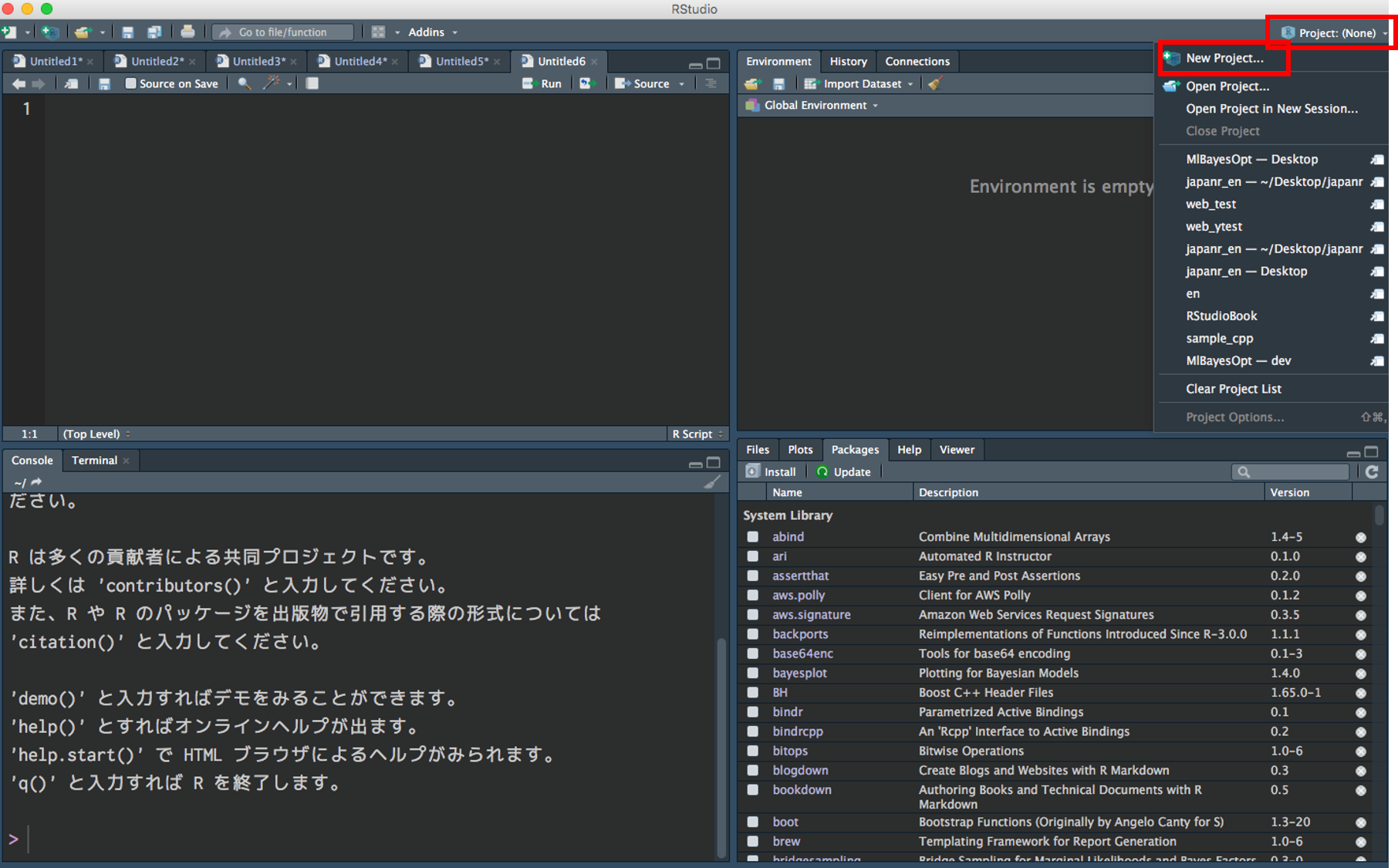
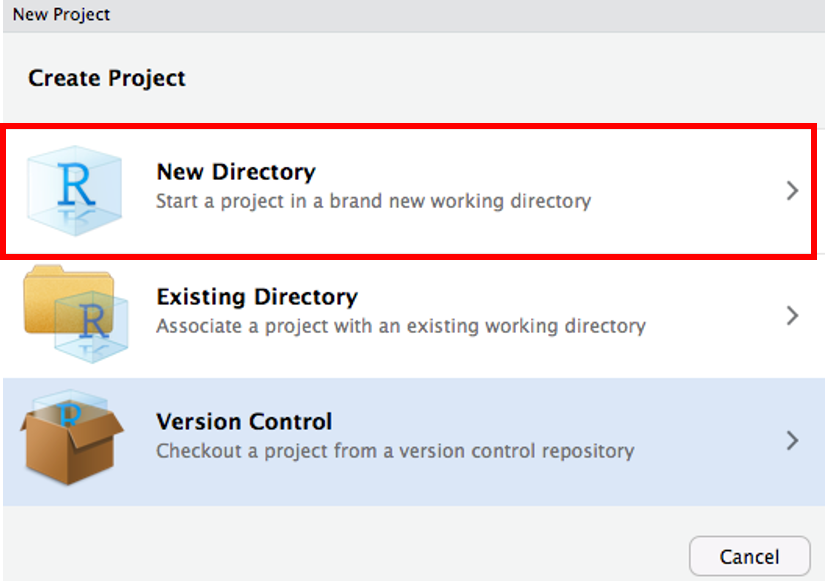
New Directory → New Project
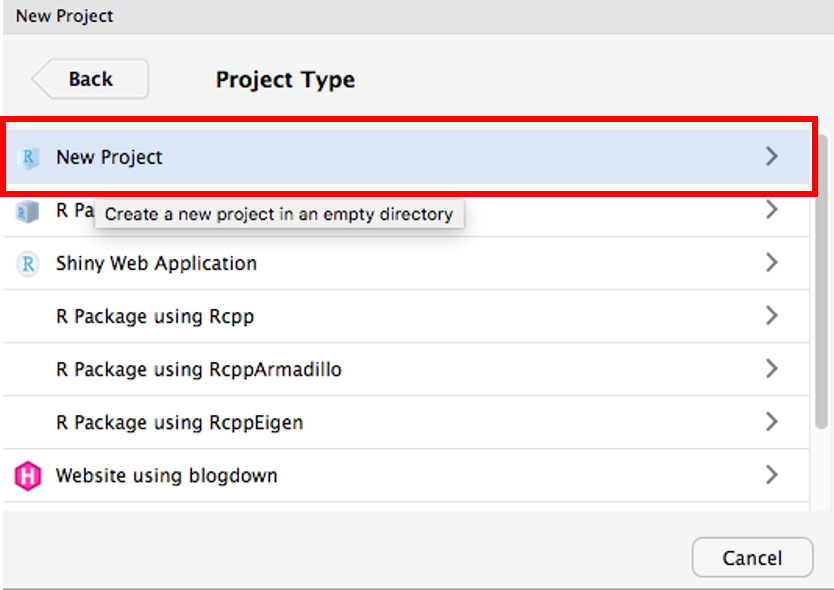
ディレクトリ名を入力
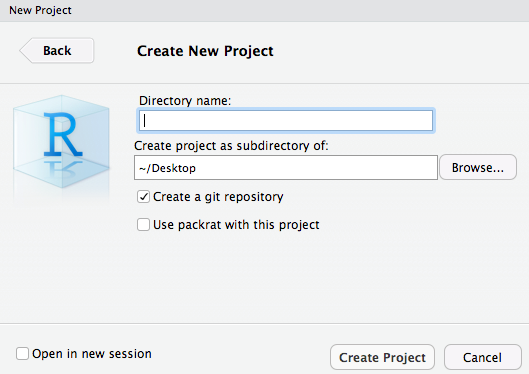
Done!
- 読み込みの関数は、プロジェクトの中のファイルを探しにいきます。
- 書籍によっては
setwd()を書いているものもありますが、RStudioプロジェクトでは必要ありません。- むしろ、RStudio プロジェクトでは非推奨
いよいよデータの読み込み
ローカルにあるファイル
csv
read.csv()
- パッケージを使わない方法
- R < 4.0.0 では
stringsAsFactors = TRUEがデフォルトになっているので、stringsAsFactors = FALSEをつけることを推奨します。
readr::read_csv()
- 高速で、列の型をいい感じにやってくれる(オススメ)
data.table::fread()
readr::read_csv()よりも高速- デフォルトでは、data.table というデータフレームとは別の形で読み込まれるのでデータフレームがいいときは
data.table = FALSE
どれがいいのか
- 個人的には readrパッケージの
read_***()関数が一番オススメ - 速い、エンコーディングの調整が難しくない
- 参考速度比較表
| read.*** | read_*** | fread | |
|---|---|---|---|
| 速さ(45MB) | 3秒 | 0.8 秒 | 0.6秒 |
| 区切り値の判定ミス | × | × | △ |
| エンコーディング | ○ | ○ | △ |
xlsx, xls
エクセルファイル
エクセルファイルを読み込めるパッケージ
- xlsx
- gdata
- XLConnect
- openxlsx
- readxl → オススメ(速い、列の型をいい感じに読める)
読み込み方
文字コードの指定
エンコーディング問題
- Windows の文字コードは Shift-JIS(CP932)
- Mac の文字コードは UTF8
- Windows で作られた(日本語を含む)ファイルを Mac で読むときは
Encoding=cp932 - Mac で作られた(日本語を含む)ファイルを Windows で読むときは
Encoding=UTF8
csv を CP932 で読む
R の標準関数
readr
data.table
関数とかオプション(引数)を
覚えられない
RStudio の GUI 読み込み
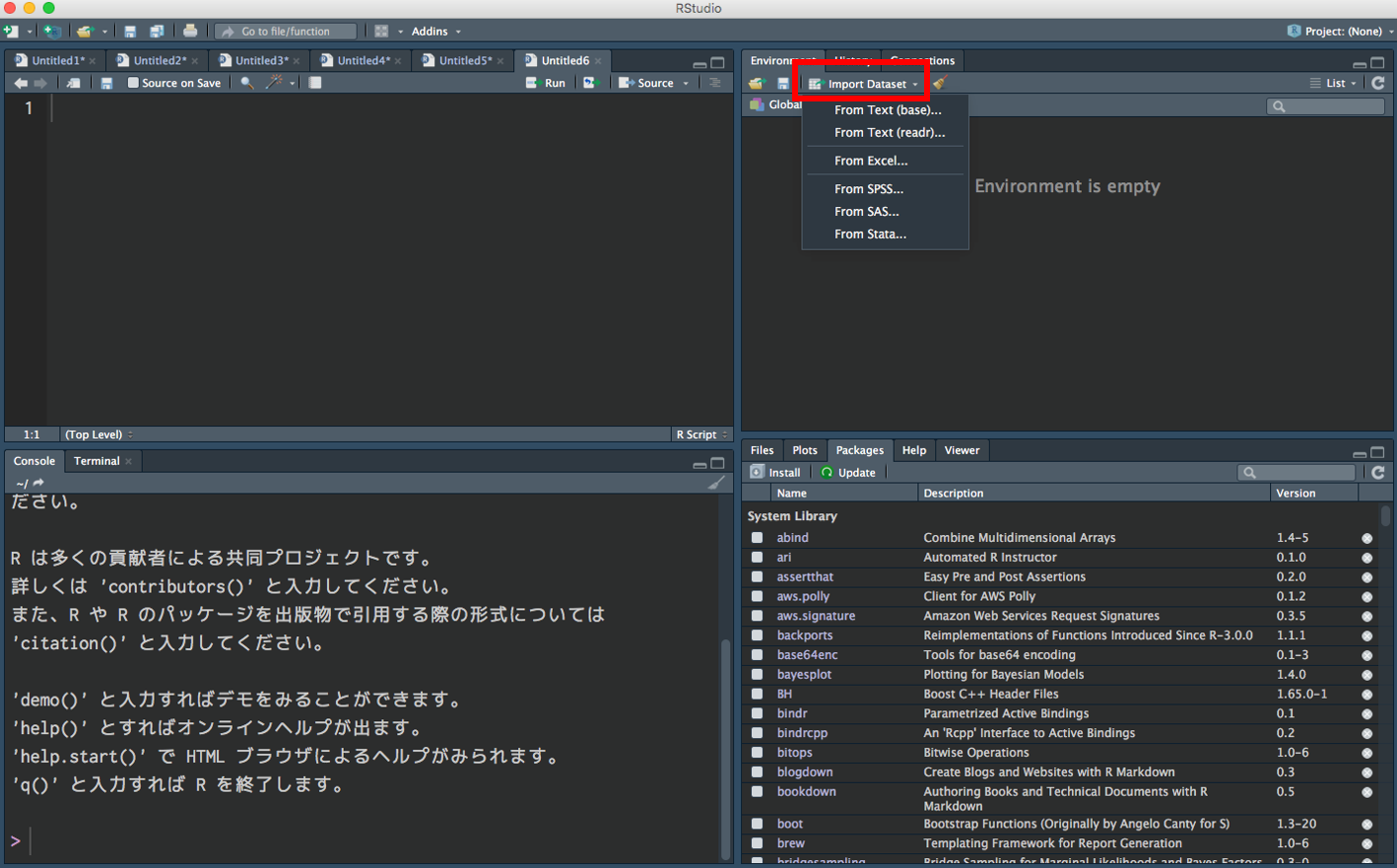
RStudio の GUI 読み込み
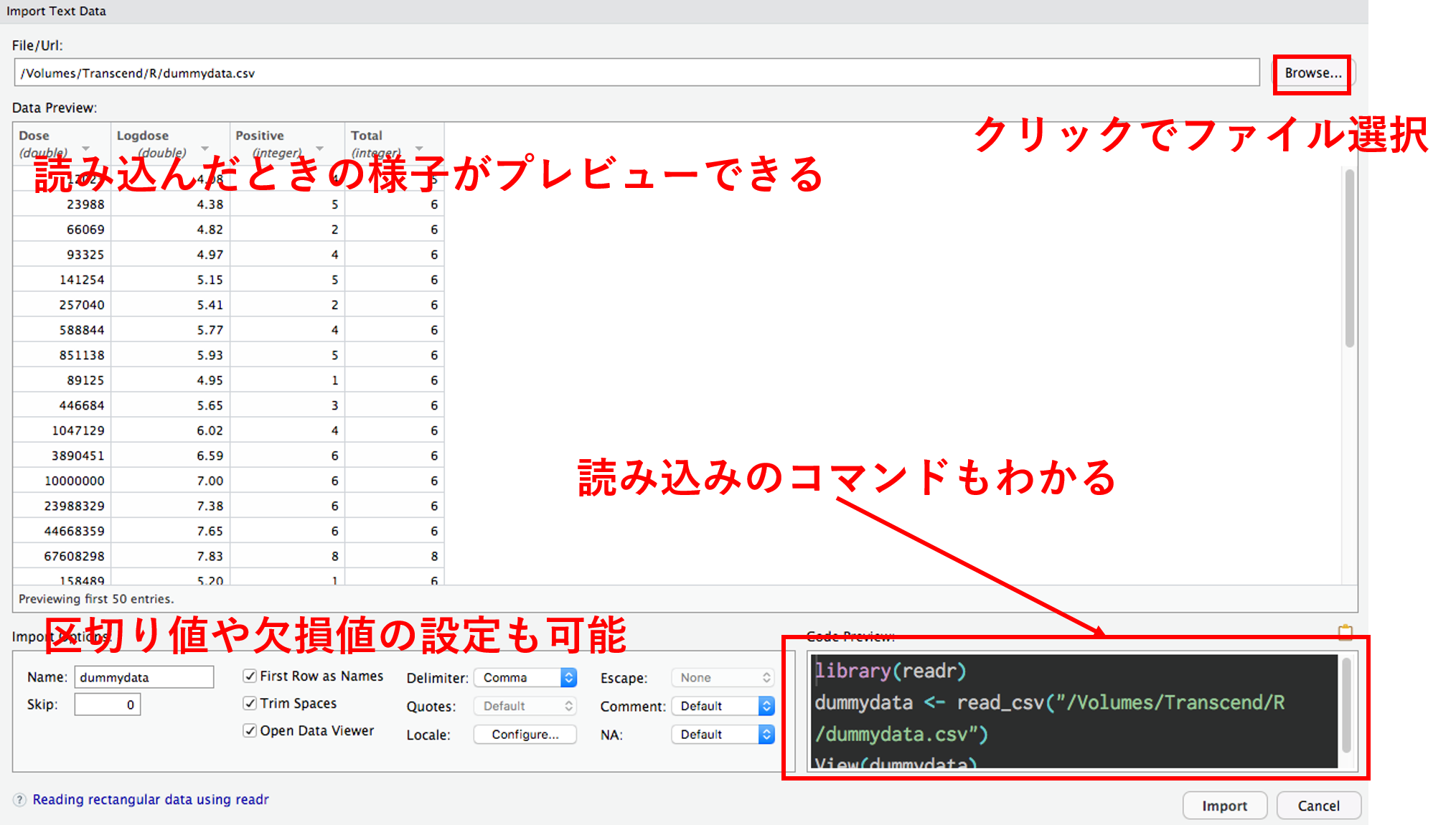
データハンドリング
データハンドリングでやること、例えば
- 縦横変換
- 絞り込み(列・行)
- 新しい変数の作成
- 集計
- テーブルのマージ
- etc… →分析できる形に整形
データハンドリング編のコンテンツ
- パイプ演算子
- tidy data
- dplyr
- FAQ
主役は


特徴
パッケージを使わないやり方より
- (大きいデータだと特に)
速い - 簡単
≒ わかりやすい - 他の tidyverse のパッケージと相性がいい
データハンドリング編のゴール
- tidy data についてざっくり理解する
- R の dplyr パッケージで簡単な集計ができるようになること
- dplyr や他のパッケージで何ができるのかをなんとなく把握して、「ググり力」を身につける
%>%
パイプ演算子
- “これまでの処理を次の関数の第 1 引数として渡す」という働き”
[1] 6例えば、以下の動作を考えてみる
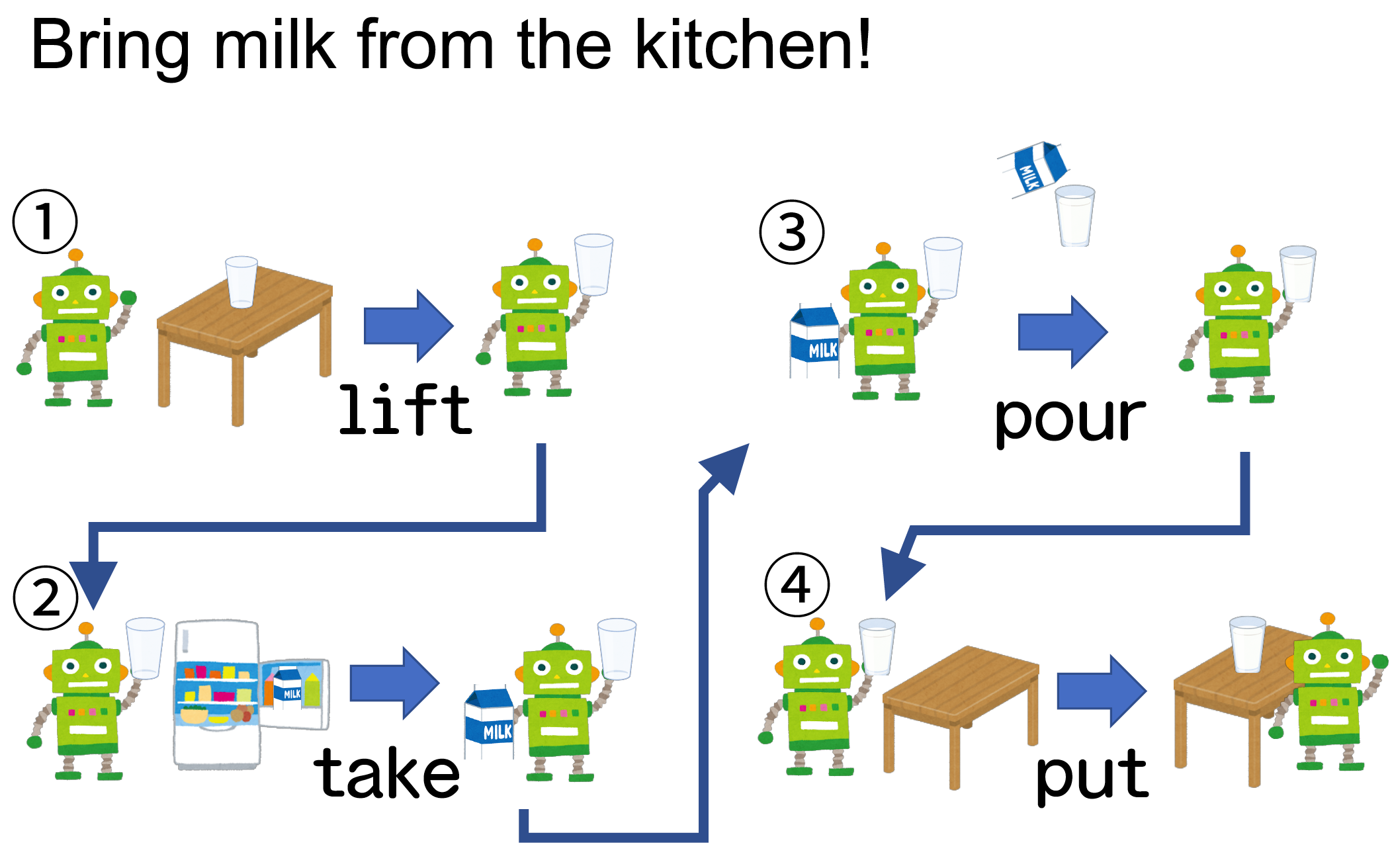
どう書くのか問題
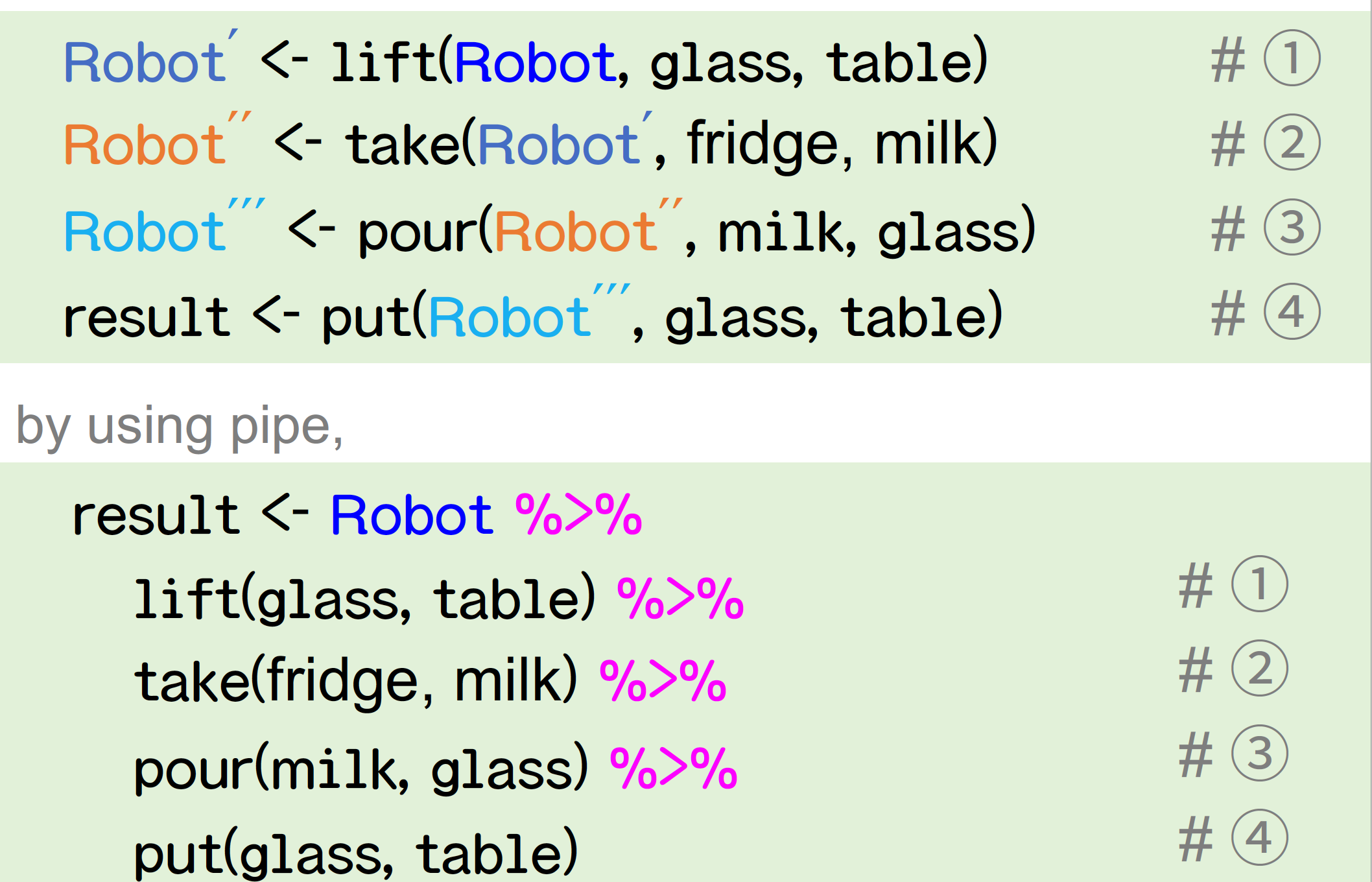
思考の流れと書く流れ
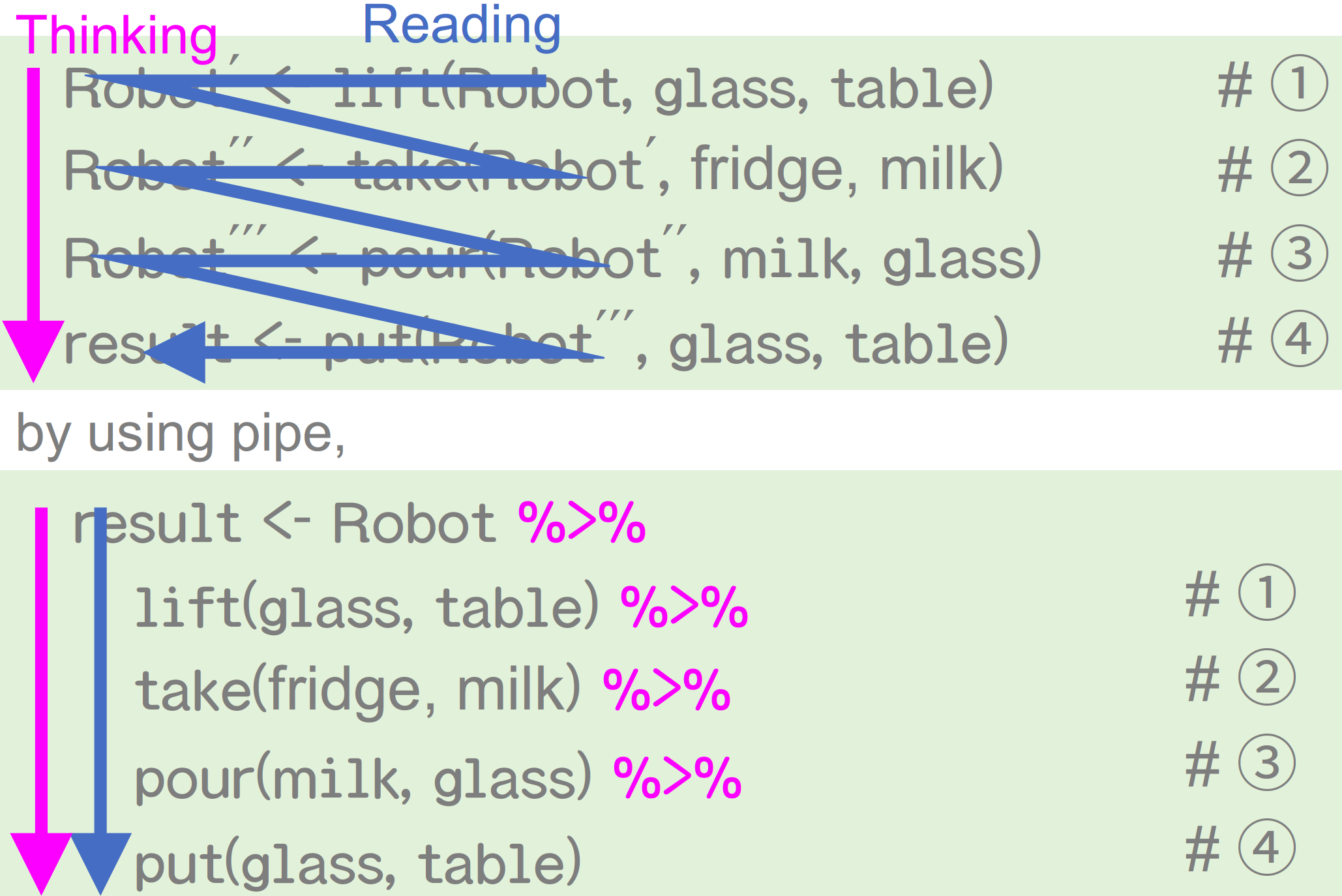
パイプ演算子を使うときのポイント
結果 <- スタート地点を書いて、やりたい処理をパイプでつないでいく- RStudioでのキーボードショートカット
- Windows:
Ctrl+Shift+M - Mac:
Cmd+Shift+M
- Windows:
tidy data
データの形式
2つのデータ形式(例: カテゴリごとの購買金額(千円))
Wide 型
Long 型
tidy data
- 2016 年に Hadley Wickham 氏が提唱
- 定義
- 1つの列が1つの変数を表す
- 1つの行が1つの観測を表す
- 1つのテーブルが1つのデータセットを含む
- Rでのtidy data は、Long 型。
tidyr
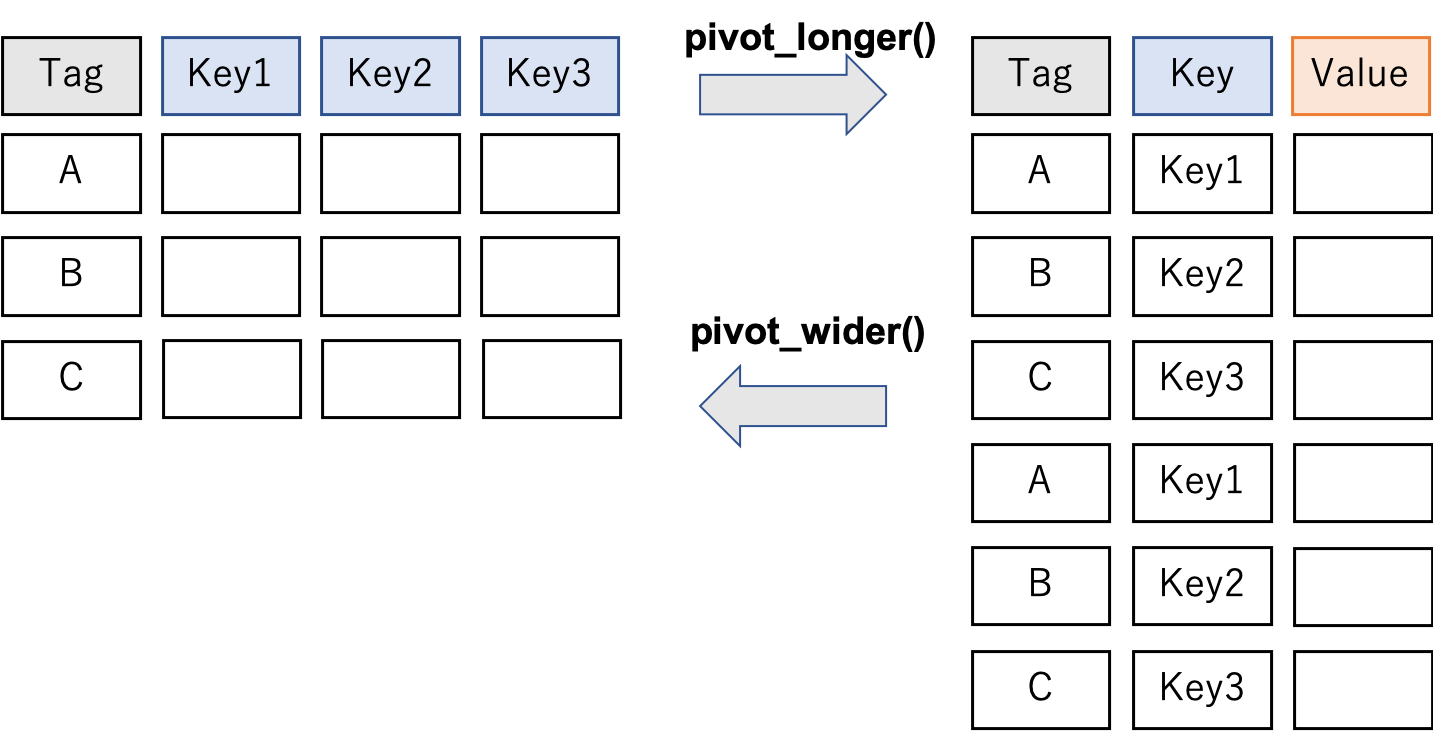
tidyrでの縦横変換の例
- 以下のデータを例に説明
- これは、いわゆる「横持ちのデータ」
df <- tibble::tibble("country" = c("a", "b", "c"),
                     "1999" = c(0.7, 0.3, 1.0),
                     "2000" = c(1.0, 2.0, 4.8),
                     "2001" = c(2.0, 5.0, 7.0))
df
# A tibble: 3 × 4
country `1999` `2000` `2001`
<chr> <dbl> <dbl> <dbl>
1 a 0.7 1 2
2 b 0.3 2 5
3 c 1 4.8 7pivot_longer
- 横→縦(tidyな形)の変換
# A tibble: 9 × 3
country year amount
<chr> <chr> <dbl>
1 a 1999 0.7
2 a 2000 1
3 a 2001 2
4 b 1999 0.3
5 b 2000 2
6 b 2001 5
7 c 1999 1
8 c 2000 4.8
9 c 2001 7 pivot_longer
- 縦(tidyな形)→横の変換
- 統計解析のパッケージによっては、この形でないとうまく行かないものもある
# A tibble: 3 × 4
  country `1999` `2000` `2001`
  <chr>    <dbl>  <dbl>  <dbl>
1 a          0.7    1        2
2 b          0.3    2        5
3 c 1 4.8 7このような場合でも
dat_m <- tibble::tibble(user = c('A', 'B', 'C'),
                        category_1 = c(10, 15, 8),
                        category_2 = c(2, 4, 5),
                        subject_1 = c(4, 5, 6),
                        subject_2 = c(5, 6, 7))
dat_m
# A tibble: 3 × 5
user category_1 category_2 subject_1 subject_2
<chr> <dbl> <dbl> <dbl> <dbl>
1 A 10 2 4 5
2 B 15 4 5 6
3 C 8 5 6 7long型に変形可能
dat_long <- dat_m %>%
  pivot_longer(cols = -user,
               names_to = c("group", "num"),
               names_sep = "_")
dat_long
# A tibble: 12 × 4
user group num value
<chr> <chr> <chr> <dbl>
1 A category 1 10
2 A category 2 2
3 A subject 1 4
4 A subject 2 5
5 B category 1 15
6 B category 2 4
7 B subject 1 5
8 B subject 2 6
9 C category 1 8
10 C category 2 5
11 C subject 1 6
12 C subject 2 7詳しくは
Tokyo.R #79 の応用セッション を参照。
参考: tidyr (〜2019/09/11)
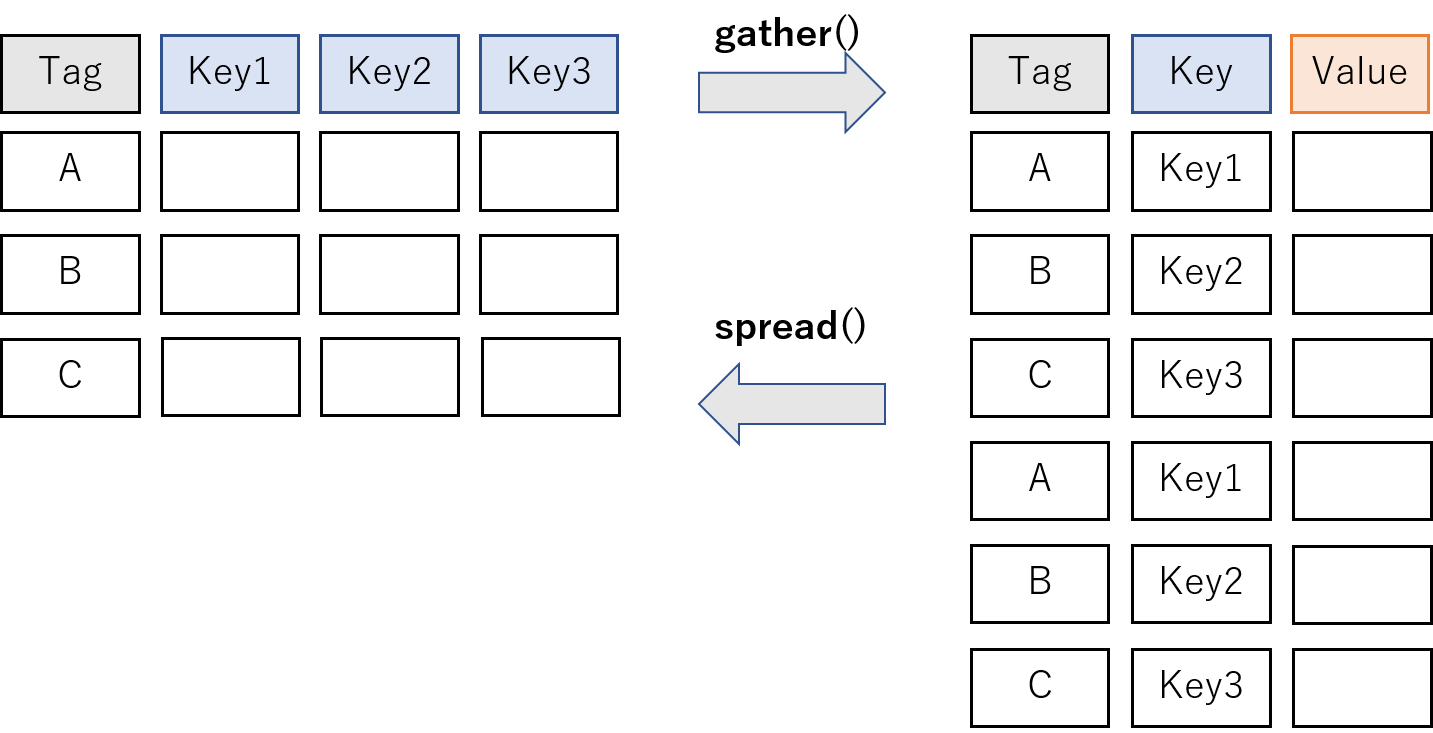
dplyr
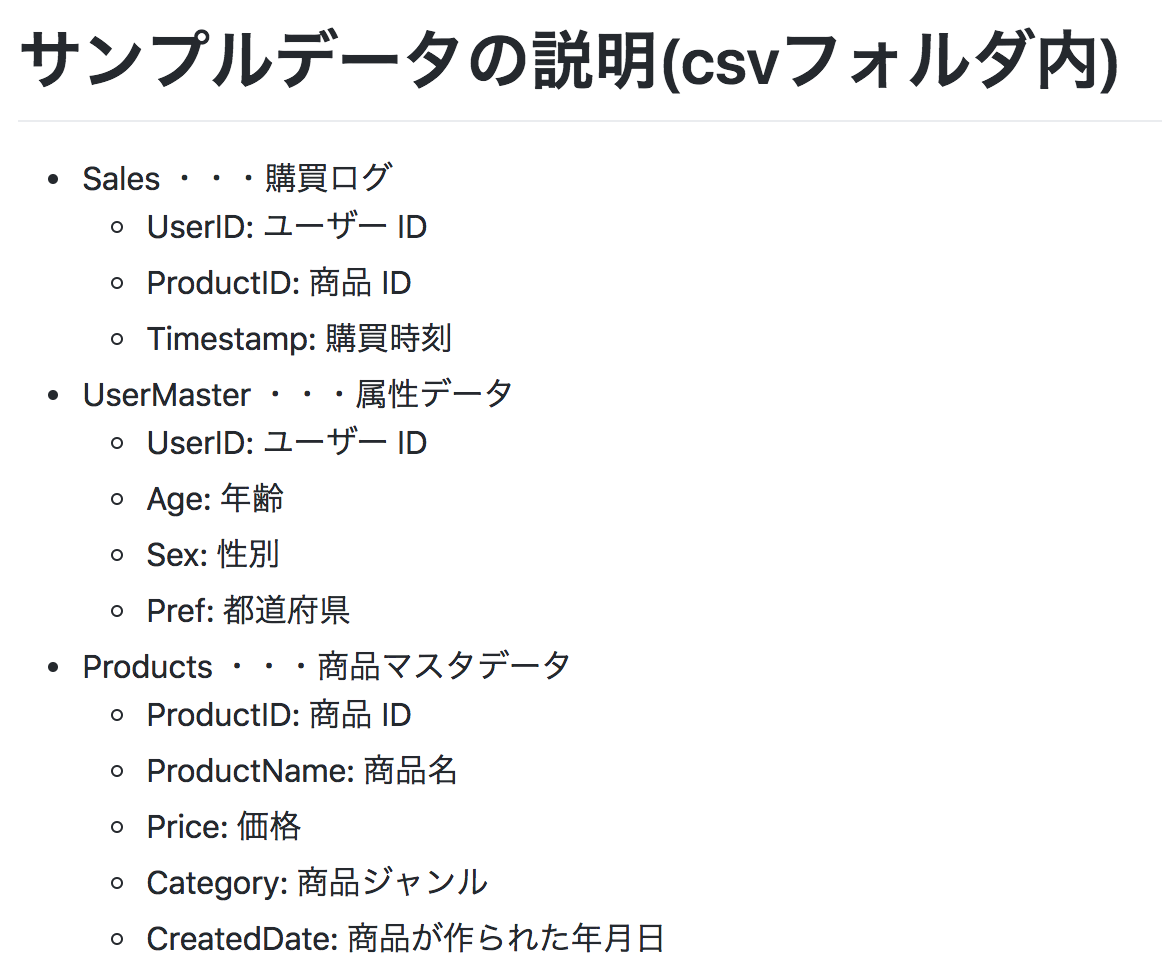
扱うデータ
EC サイトのログデータ
- を意識して作ったダミーデータ
- https://github.com/ymattu/sampledata_small
![データの説明]()
データの読み込み方
- RStudio のプロジェクトを作成
- Terminal ペインで以下を実行
git clone https://github.com/ymattu/sampledata_small- readr パッケージの関数で読み込み
dplyr
列選択
列選択のやりかたいろいろ
例
select(product, 1:3) # 列番号が連続している場合
select(product, ProductID:Price) # 列名でも連続していれば同様
select(product, !CreatedDate) # 特定の列を除く
select(product, !4) # 特定の列番号を除く
select(product, starts_with("p")) # "p"で始まる列のみを選択
select(product, starts_with("p"), ignore.case = TRUE) # 大文字小文字を無視
select(product, starts_with("p") & ends_with("e")) # "p"で始まり"e"で終わる列を選択
select(product, matches("^(Product|Price)")) # 正規表現で列名を検索- 詳しくは公式リファレンスを参照
列追加
- 税込み価格を計算
行の絞り込み
集計
- グルーピング + 集計
ここまでやったところで
パッケージを使わないでできないの?
- できるものもあります。
- select, filter あたりはできます。
- でもめんどくさい
- しかもデータが大きいと遅い
- このあたり、私の過去資料もみてね
- でも
$はお手軽だしよく使います。
$で 1 列だけ取り出す
[1] "雑貨・日用品"           "花・グリーン"           "食品"
[4] "衣料品"                 "ヘルス&ビューティー"   "家具・インテリア・家電"
日付の操作
lubridate パッケージ

データハンドリングでの使い所
たくさんあるけど例えば
ここから集計につなげる
ユーザー、年ごとに集計
その他、代表的な
(面倒くさい)型たち
文字列型
- stringr パッケージ
- https://kazutan.github.io/kazutanR/stringr-intro.html
- 『RユーザーのためのRStudio実践入門 改定2版』付録A
因子型(factor 型)
- forcats パッケージ
- https://kazutan.github.io/kazutanR/forcats_test.html
FAQ
dplyr とかだと何で
R の標準関数より速いの?
Answer : C++を使っているから
- dplyrや readrでは、メインの処理を C++でやり、結果を R で受け取る、という構造になっています。
- Rcpp パッケージが活躍!
まとめ
Contents
- R と RStudio について
- データの読み込み
- データハンドリング編
- tidyverse について
- readrパッケージを用いたテーブルデータの読み込み
- dplyr, tidyrパッケージを用いたデータハンドリング
ありがとうございました
enjoy!